Diana Stralberg
Diana Stralberg
Author: Bhawana Paudel
Diana Stralberg is a landscape ecologist whose work centers on a deceptively simple question: where can species persist as climate change and disturbance intensify?
A self-described generalist, she focuses on spatial patterns—how topography, hydrology, fire and microclimate interact with regional climate trends (macroclimate) to shape refugia that can buffer ecological change.
The Beginning of an Illustrious Career
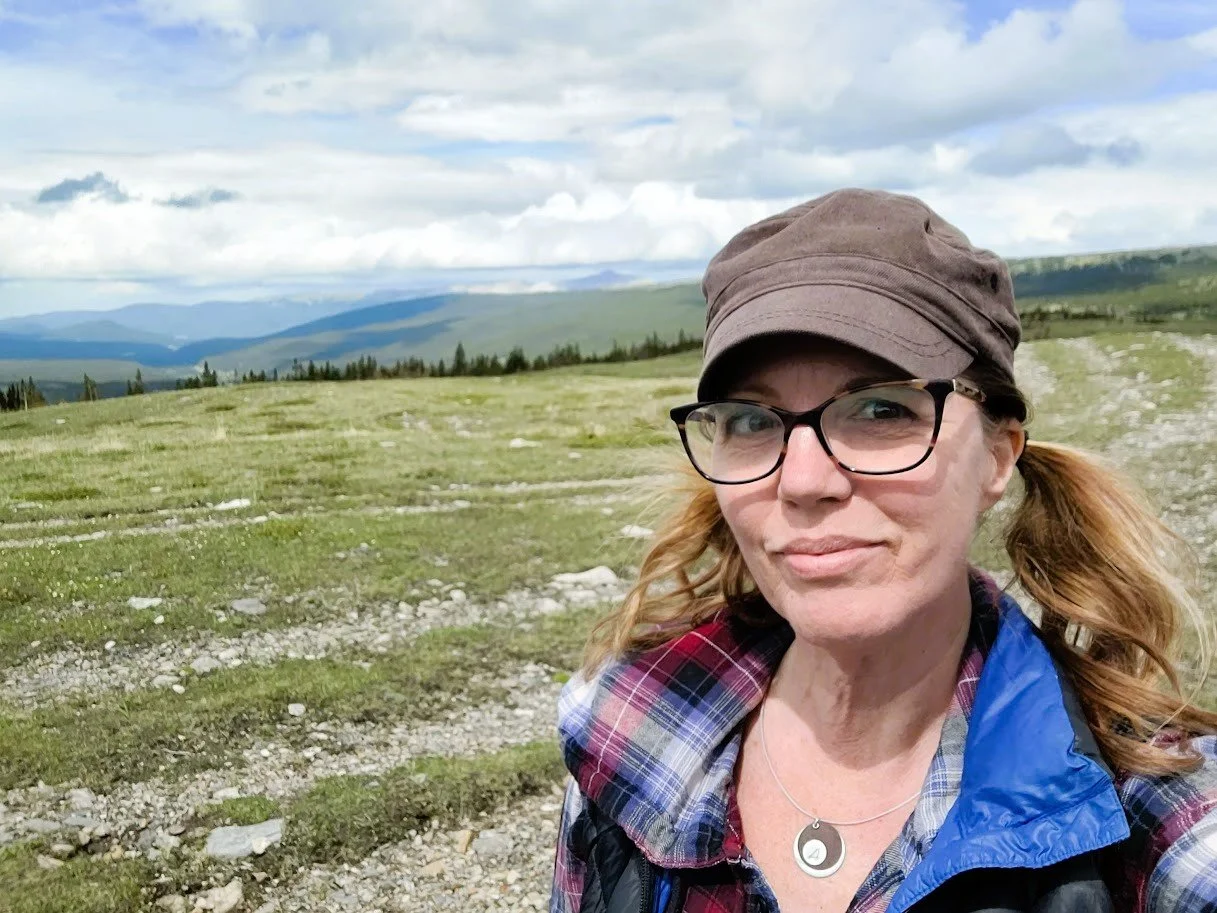
Dr. Diana Stralberg first became interested in the impacts of global climate change through her Master's work at the University of Michigan with Professor Terry Root, whose early research documented climate-driven shifts in species’ ranges and contributed to IPCC assessments. Later, while working as a landscape ecologist at PRBO Conservation Science in the San Francisco Bay Area, her interests broadened and sharpened. Much of her work focused on the vulnerability of coastal ecosystems to sea-level rise, particularly tidal marshes, where elevation, sediment dynamics, and vegetation interact in ways that can either buffer or amplify climate stress. These experiences nudged Stralberg toward questions about topographic diversity, spatial heterogeneity, and the conditions under which ecosystems resist or absorb climate change. Through climate-focused conservation planning workshops funded by a major foundation, Stralberg was exposed to a community of ecologists and conservation biologists who were beginning to articulate the concept of climate-change refugia. She carried these ideas with her to Alberta, Canada, where she pursued a PhD in ecology and began working more explicitly on refugia in boreal systems.
Refugia Researcher
Stralberg’s work spans multiple refugia types and scales. Although she most often works on macrorefugia, looking for buffering across regional and continental scales, her team also develops microrefugia products at a finer resolution, including fire refugia (where and under what conditions places are less likely to burn), drought refugia (where moisture and hydrologic settings buffer stress), and thermal refugia (where microclimate moderates heat exposure).
Much of Stralberg’s applied work is grounded in partnerships with Canadian jurisdictions, especially in British Columbia, where climate-informed land and forest planning is evolving quickly. Collaborations with government partners have sharpened not only what is mapped, but how products are framed—placing emphasis on guidance for appropriate use, limitations, and integration with Indigenous knowledge and planning priorities. Her group’s current directions speak to both biodiversity conservation and broader goals such as forest health and community protection.
As her career has progressed, she has increasingly focused on how refugia concepts can be operationalized across the full spectrum of landscape planning. While refugia science is often framed in the context of protected areas, Stralberg sees substantial opportunities to embed these ideas into forestry, resource development, restoration, and broader land-use planning. She continues to rely heavily on emerging technologies—such as remote sensing and machine-learning approaches—but also makes a point of spending time in the field. Fieldwork remains essential for generating new questions, grounding interpretations, and reminding her why spatial abstractions ultimately matter.
Memorable Experiences
A particularly formative experience for Diana was the opportunity to organize a boreal refugia workshop in Edmonton with Canadian Forest Service partners. It was at this meeting that she first connected with Toni Lyn Morelli and the broader Refugia Research Coalition, crystallizing ideas that later became central to her research program with the Canadian Forest Service.
Advice for Future Researchers
Stralberg wants to stress that the world needs generalists. Complex problems like climate change rarely respect disciplinary boundaries, and some of the most useful insights emerge from combining a variety of perspectives rather than mastering a single one. Diana’s advice is not to be afraid of stepping outside of your comfort zone and learning new tools later in life. She completed her PhD in her forties, and continues to challenge herself to learn new approaches as research questions evolve.